 Hardanger Shop
Stitch
Hardanger embroidery is not cross-stitch
You tell it by the cut, where the cloth between the blocks comes out. The pages that rank for that question do not agree whether the block is four stitches or five.
Send on hardanger.shop/guide/en/hardangersom-er-ikkje-korssting
Cross-stitch does not cut the cloth out.
- The differenceThe cut
- The blockFour or five
- The apronUp to 180 hours
The cut
Cross-stitch does not cut the cloth out.
Solveig Lønmo, in klostersøm, Store norske leksikon, last updated 5 August 2025, calls it a group of stitches of equal length lying against each other. They follow the threads of the ground, for example over four of them at a time. On the right side they run with the thread. On the wrong side they cross one thread on the diagonal. In hardangersøm the cloth between the blocks is cut off close to the stitches.
Barbro Tronhuus Storlien, in utskårsøm, last updated 26 November 2024, writes that fields of the ground are cut out and replaced with stitched pattern. One of the two styles comes from Italian reticella of the 1500s, threads withdrawn in both directions. That style is the basis of hardangersøm.
Fadermagi names bargello and cross-stitch as what sets the technique apart. That page is wrong. Kanevassøm, the same author, 26 November 2024, names cross-stitch as another stitch used in kanevassøm. Not as the thing that makes the work hardangersøm.
The count
English Wikipedia, Hardanger embroidery, says five parallel satin stitches over four threads each way. The Embroiderers' Guild of America, 12 February 2024, puts both numbers in one sentence. Blocks of four satin stitches, with five parallel stitches on each side.
femstettasaum is one of the names Storlien lists for kanevassøm. It is not a sentence that every hardangersøm block is five stitches. The hardangersøm article, 24 February 2025, gives no count.
Not one number as the law.
The apron
The apron is white. A wide border can take up to 180 hours. The same article quotes Gunvor Stuland, Hardangersaum (1960), against strongly coloured yarn, and then says that white and coloured hardangersøm live side by side.
The green print in the shop is a different design. Stars, fruit trees and mountains, green on a cream ground, lettered “Julegave fra Hardanger”. It is a print. It is not the 180-hour apron, and it is not the drawing above.
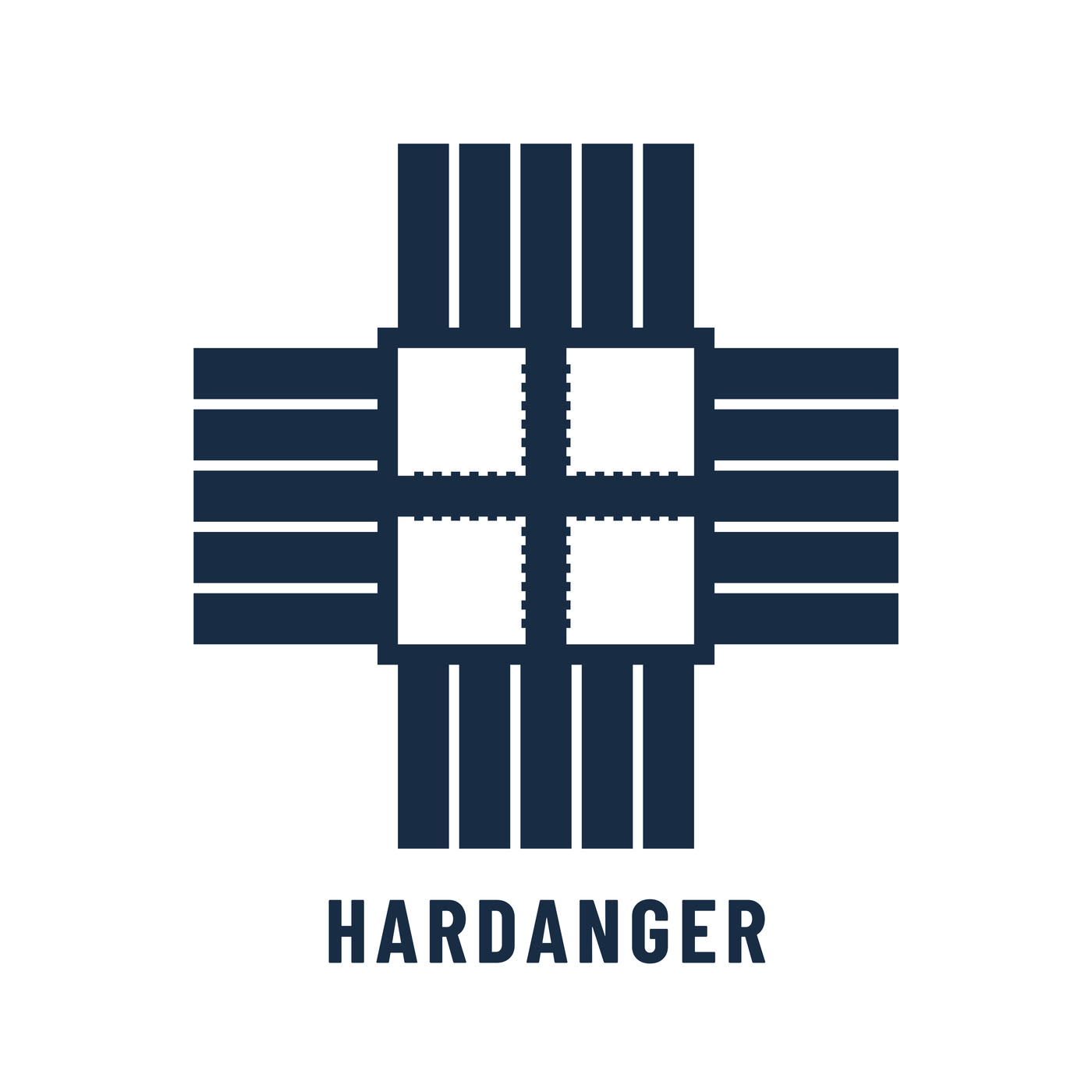
On 26 September 2026 we drew the square with five stitches. That is Wikipedia’s number, not a number from the encyclopedia, and the square is not for sale.
We have not stitched a cloth for this page. We do not sell a pattern.
We have no physical shop in Odda. What we make is printed to order and sent by post.

Sources
Checked 28 September 2026:
- klostersøm in Store norske leksikon, Solveig Lønmo, last updated 5 August 2025. Stitches of equal length that follow the thread, for example over four, and the cloth cut off close to them.
- utskårsøm in Store norske leksikon, Barbro Tronhuus Storlien, last updated 26 November 2024. Reticella of the 1500s as the basis of hardangersøm.
- kanevassøm in Store norske leksikon, Barbro Tronhuus Storlien, last updated 26 November 2024. Cross-stitch as another stitch, and the name femstettasaum.
- hardangersøm in Store norske leksikon, Barbro Tronhuus Storlien, last updated 24 February 2025. Up to 180 hours, Stuland against strongly coloured yarn, and white and coloured work side by side. No count.
- Hardanger embroidery in English Wikipedia. Five satin stitches over four threads. The source of that one number, not of a rule.
- Hardanger at the Embroiderers' Guild of America, 12 February 2024. Four and five in the same sentence.
- Alt du trenger å vite om Hardangersøm at Fadermagi. It ranks, and it is not the source of a stitch.